


Ultimate Pro Carpenter Bee Trap
Ultimate Pro Carpenter Bee Trap
Stop new holes this season
Save thousands in repairs
Fewer bees every year
Couldn't load pickup availability
Ultimate Pro Carpenter Bee Trap
-

INCREDIBLE! WORRKS AMAZINGLY! Keeps filling up with carpenter bees! No sprays needed! Just these bad boys! Works better than any spray!


100,000+ Homeowners Ditched the Sprays & Exterminators

Those "Few Little Holes" Are a $5,000 Problem Waiting to Happen.
- ⚠️Bees return every year— expanding tunnels from 4" to 12" in just two seasons.
- ⚠️Woodpeckers follow— turning ½" holes into 2" gouges chasing the larvae inside.
- ⚠️Insurance won't cover it— they call it "preventable maintenance." You pay 100%.
- ⚠️It compounds like debt— each female creates 6 offspring. They ALL come back next spring.

The Trap That Gets Better With Every Catch.
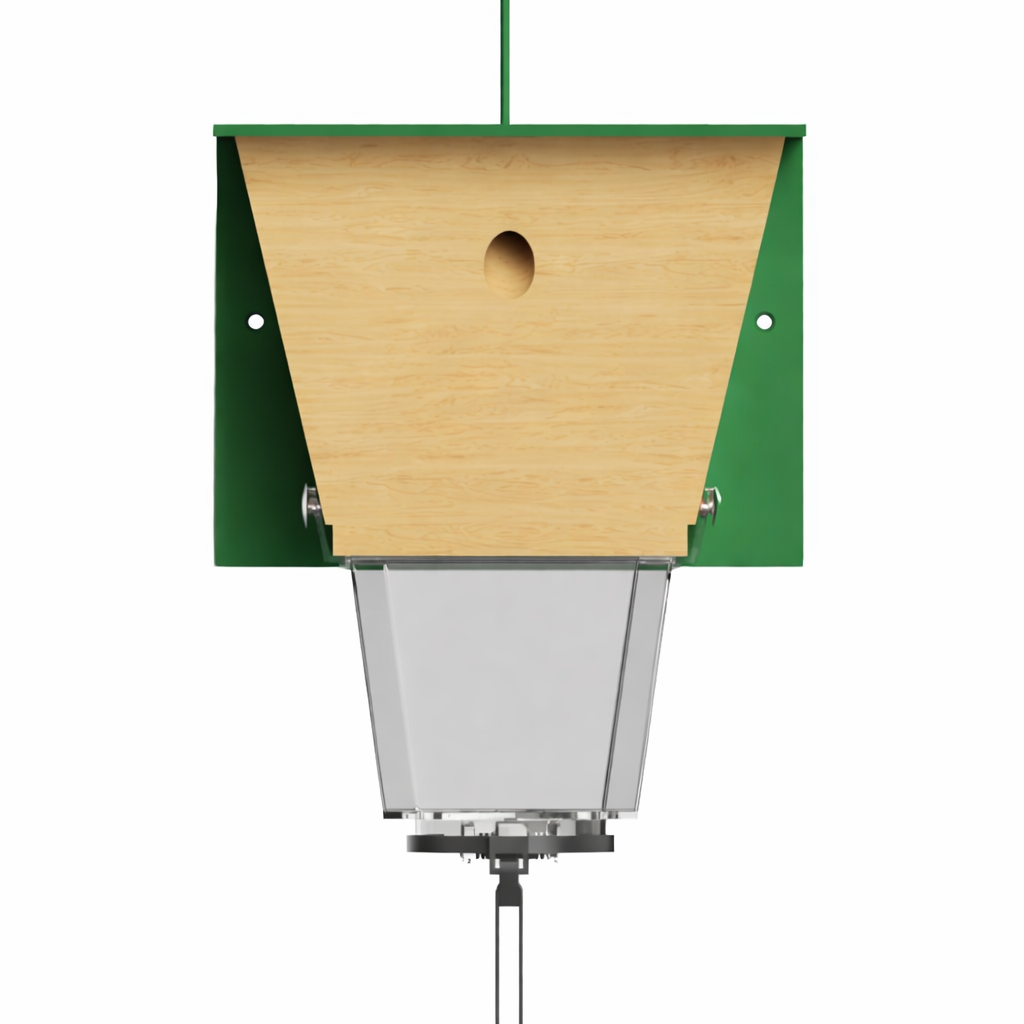
- 🔬Phototaxis exploitation— Bees fly toward light. Our angled holes guide them in. The only light out? The clear chamber below. They can't escape.
- 📡Pheromone snowball— Trapped bees release chemical signals that attract MORE bees. Each catch amplifies the signal.
- 🚫No bait. No chemicals. No refills.— Just biology that's been true for 100 million years.
- ↗️Opposite of sprays— Sprays wear off. This trap accelerates on its own.

Carpenter Bees Aren't Honeybees. Your Home Comes First.
- 🐝Solitary, not colony insects— They don't live in hives. They don't make honey.
- 🌸They're "nectar robbers"— They bite holes in flowers and steal nectar without pollinating.
- 🧒100% chemical-free— Safe for your kids, your pets, and your garden.
- ♻️Made with ocean-bound recycled plastic— 22 tons diverted from oceans every year.
They Were Skeptical Too. Then the Jar Filled Up.
Rated 4.84/5.00 With 7,000+ Customers
-

★★★★★
This Trap Changed Everything
"Purchased spray at first. Did not kill any of the carpenter bees that I sprayed DIRECTLY. This trap has caught 6 carpenter bees in 3 days!"
-

★★★★★
Be Patient — It Works
"Had it up for 3 weeks and nothing. But then one day there was one in there and the next thing we know it's filled with them! Once you get one, the rest will follow."
-

★★★★★
Kids Can Finally Play Outside
"My children were terrified to go outside and play! It saved my yard, porch and now my children can go out and enjoy our new yard!!"
-

★★★★★
Better Than a $300 Exterminator
"I tried the exterminators — far too ignorant to solve the problem — they just want my cash. This trap has done more in one season than 3 years of exterminator visits. Wish I'd found this sooner."


FAQ's
How long until it starts catching bees?
How long until it starts catching bees?
Most customers see their first catch within 1–3 weeks. This is normal — the trap needs to be discovered by scouting bees. Once the first bee is caught, it releases pheromones that attract others. Tip: leave caught bees inside. They're your best "bait."
Will it hurt honeybees?
Will it hurt honeybees?
No. The trap targets carpenter bee behavior and body size specifically. It's 100% chemical-free, so there's zero risk to beneficial pollinators, kids, or pets.
Where should I hang the trap?
Where should I hang the trap?
On the sunny side of your home, near existing damage (holes, sawdust piles). Hang it at peak height — typically at the fascia/eave line or at the top of deck posts. The closer to active damage, the faster the first catch.
I've tried other traps. They didn't work. Why is this different?
I've tried other traps. They didn't work. Why is this different?
Other traps don't use the bee's biology against it. Our angled entry holes mimic natural tunnels. The clear chamber exploits their light instinct. And the aerated design lets pheromone signals circulate — so each catch attracts the next one. It's patented for a reason.
How many traps do I need?
How many traps do I need?
One trap covers a standard problem area. For larger properties or severe infestations, 2–4 traps provide full perimeter coverage. Many customers start with one and add more after seeing results.
What if it doesn't work for me?
What if it doesn't work for me?
We offer a 100% satisfaction guarantee. Over 100,000 traps sold with 4.8+ stars across every major platform — but if yours doesn't perform, we stand behind it completely.